Liturgy
Showing 157–168 of 206 resultsSorted by latest
-

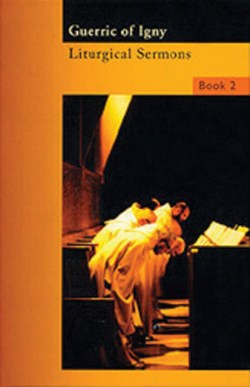
Liturgical Sermons Book 2 Guerric Of Igny
$31.95SKU (ISBN): 9780879072322ISBN10: 0879072326Guerric Of Igny | Translator: Monks At Mount St. Bernard AbbeyBinding: Trade PaperPublished: November 1999Cistercian FathersPublisher: Liturgical Press Print On Demand Product
Add to cartin stock within 3-5 days of online purchase
-
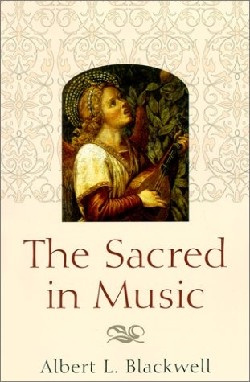
Sacred In Music
$40.00Religion and music are complementary resources for interpreting our lives. Music serves the sacred in ways that can be specified and articulated, yet the connection between them has been sorely neglected in the scholarly study of religion. In The Sacred in Music, Albert Blackwell brings the two subjects together in a celebration of the rich Western musical tradition, both classical and Christian.
Add to cartin stock within 3-5 days of online purchase
-
Eucharist
$99.95The Handbook for Liturgical Studies provides a complete course of liturgical studies in five volumes. It is offered as a model, source, and reference for students of liturgy and liturgical ministry.
The Handbook for Liturgical Studies is marked by a number of traits which differentiate it from its predecessor Anamnesis, published by the Pontifical Liturgical Institute. First, the subjects in the liturgical ordo, history, and tradition are examined as sources and components of the theology of liturgy. Next, the Handbook pays significant attention to the role played by the human sciences in the liturgy (psycho-sociology, anthropology, linguistics, and the arts.) Pastoral and spiritual considerations receive appropriate treatment in light of liturgical principles, and general models based on the meaning and purpose of the liturgy are suggested. The materials of the East and the non-Roman West are integrated with the Roman, providing a comprehensive vision of Christian worship.
More than forty authors from Asia, Africa, Latin America, North America, and Eastern and Western Europe have contributed to the Handbook. Many are professors and graduates of the Pontifical Liturgical Institute in Rome. Each author, while drawing material from liturgical tradition and from ancient, medieval, and modern sources, writes also from a particular research and personal interest in a subject. Although diverse in style, the authors collectively express a spirit of fidelity to the Church, to its doctrine and tradition, and to its mission. The result is a cohesive view of the meaning, purpose, and celebration of Christian worship.
The editor’s goal through these volumes is for students to pay attention to the gradual unfolding of the material from Volume One to Volume Five as well as to the methodology, historical setting, theological and spiritual doctrines, and the pastoral concerns in the Handbook. Through the study of these volumes, readers are led not only to a scientific understanding of the liturgy but also to an active and spiritually fruitful participation in the ecclesial celebration of Christ’s mystery desired by the Second Vatican Council.
Volume III: The Eucharist contributes to the reflection on the meaning and purpose of the eucharistic celebration. It also offers to teachers and students of liturgy a handbook for studying this subject according to a system based on historical development, theology and doctrine, liturgical texts and traditions in bo
Add to cartin stock within 3-5 days of online purchase
-
Lay Preaching : State Of The Question
$15.95Lay preaching-preaching rendered by a baptized Christian who has not been ordained a deacon, priest, or bishop-has been a growing issue of concern since the mid-1980s. Along with this concern, a new emphasis on the important role of the laity in spreading the Gospel has emerged. This emphasis has seen lay preaching develop into a common practice in many parts of the country. But if the needs of God’s people to hear the Word are to be met, a systematic approach must be taken to this timely and urgent issue. In Lay Preaching Patricia Parachini provides that approach.
Preaching is a broad category (or genus) which includes different types (or species) of preaching including pre-evangelistic preaching, evangelization, catechetical preaching or catechesis, preaching in church, and liturgical preaching. Although Parachini briefly discusses lay preaching in general, her primary focus in Lay Preaching is the most frequently debated type of preaching and the only type from which laity are regularly excluded: liturgical preaching.
In the past ten years there has been a growing interest in the ministry of liturgical preaching among Roman Catholic men and women that are not ordained but minister in the Church. In Lay Preaching Parachini pays attention to that growing interest, while maintaining that people need to hear the Word preached to them well and effectively. She begins by highlighting significant moments in the history of lay preaching and addressing some of the major theological and liturgical concerns that are key to a discussion of preaching. Then, Parachini explains the pertinent canons on preaching from the 1983 revised Code of Canon Law. Finally, she describes current practices throughout the U.S. regarding lay preaching and raises fundamental questions that provide direction for the future.
Add to cartin stock within 3-5 days of online purchase
-
Liturgy And The Social Sciences
$16.95In his letter to liturgists meeting in Mainz, Germany, in 1964, theologian Romano Guardini asked: “Is ritual a forgotten way of doing things?” That question challenged Catholics to reevaluate the roots and roles of ritual. In an ongoing response to that challenge, liturgists have sought to reinterpret the multiple meanings of ritual using insights from the social sciences. In Liturgy and the Social Sciences, Nathan Mitchell examines the responses of liturgists to Guardini’s famous question.
In the first chapter Mitchell focuses on Aidan Kavanagh, O.S.B., a noted U.S. liturgist that undertook the challenge of answering Guardini’s question. He explains how Father Kavanagh’s innovative call for a new discipline-a “political science” of behavior-was taken up by American liturgists in a “classical” or “high church” mode that emphasized ritual action as traditional, authoritative, repetitive, conservative, and “canonical.”
The second chapter examines how the “high church consensus” began to unravel as a result of critical work done on “emerging ritual” by Ronald Grimes and David Kertzer. These scholars argued that new categories were needed to understand how ritual connects with social life and explained the characteristics of “emerging ritual” as innovative, untraditional, unpredictable, playful, and short term.
In the third chapter Mitchell explores some of the proposals that a new generation of anthropologists have made for interpreting ritual. He gives attention to the research of Talal Asad, who suggests that rituals are a “technology” aimed at producing “virtuous selves.” Michel Foucault’s “technologies of the self” is also discussed in this chapter.
Although written for directors of liturgy, Liturgy and the Social Sciences will also appeal to DREs, clergy and religious, directors of adult formation, persons working with candidates in RCIA, and students and teachers of liturgy who want to look beyond what we do to understand why we do it.
Add to cartin stock within 3-5 days of online purchase
-
Fundamental Liturgy
$99.95The Handbook for Liturgical Studies provides a complete course of liturgical studies in five volumes. It is offered as a model, source, and reference for students of liturgy and liturgical ministry.
The Handbook for Liturgical Studies is marked by a number of traits which differentiate it from its predecessor Anamnesis, published by the Pontifical Liturgical Institute. First, the subjects in the liturgical ordo, history, and tradition are examined as sources and components of the theology of liturgy. Next, the Handbook pays significant attention to the role played by the human sciences in the liturgy (psycho-sociology, anthropology, linguistics, and the arts.) Pastoral and spiritual considerations receive appropriate treatment in light of liturgical principles, and general models based on the meaning and purpose of the liturgy are suggested. The materials of the East and the non-Roman West are integrated with the Roman, providing a comprehensive vision of Christian worship.
More than forty authors from Asia, Africa, Latin America, North America, and Eastern and Western Europe have contributed to the Handbook. Many are professors and graduates of the Pontifical Liturgical Institute in Rome. Each author, while drawing material from liturgical tradition and from ancient, medieval, and modern sources, writes also from a particular research and personal interest in a subject. Although diverse in style, the authors collectively express a spirit of fidelity to the Church, to its doctrine and tradition, and to its mission. The result is a cohesive view of the meaning, purpose, and celebration of Christian worship.
The editor’s goal through these volumes is for students to pay attention to the gradual unfolding of the material from Volume One to Volume Five as well as to the methodology, historical setting, theological and spiritual doctrines, and the pastoral concerns in the Handbook. Through the study of these volumes, readers are led not only to a scientific understanding of the liturgy but also to an active and spiritually fruitful participation in the ecclesial celebration of Christ’s mystery desired by the Second Vatican Council.
What concepts must one have in order to understand and explain the nature and purpose, the plan and actualization, and the relational character of the liturgy? Volume 2: Fundamental Liturgy addresses this question in three parts-epistemology, celebration, and human sciences-which develop the foundational concepts of
Add to cartin stock within 3-5 days of online purchase
-
Christ In The Gospels Of The Ordinary Sundays
$23.93Father Brown discusses how a Gospel was formed and explains what is distinctive about each of the four Gospels. Then he fits the Sunday readings into an overall picture of each Gospel, showing how the Gospel shapes the narrative, its the theological emphases, and what it says to readers.
Add to cartin stock within 3-5 days of online purchase
-
Let Justice Sing
$15.95Justice has been an urgent concern of twentieth-century hymn writers, but are they the first to place such an emphasis on it? In Let Justice Sing, Paul Westermeyer offers an answer with the hope that it will stimulate dialogue, future studies, and an understanding of the past that can be applied to the present.
Let Justice Sing explores the content, context, and importance of justice within the “warp and woof” of hymnody. By analyzing these aspects and past hymnic repertoires, it suggests to the Church and others who wish to join the moral deliberation it presumes, that not only have Christians always sung about justice, but the message transcends the messengers.
The perspective and dialogue fostered by Let Justice Sing is directed to students in college or seminary courses where hymnody, Church music, or ethics is the topic; adults in forums or classes where questions about music and justice arise; and anyone with an interest in hymnody, justice, or the relationship between the two.
Add to cartin stock within 3-5 days of online purchase
-
Liturgy And The Moral Self
$29.95In 1979 liturgical theologian Don Saliers published an essay challenging both the Church’s and the theological academy’s understanding of the relationship between liturgy and ethics. Liturgy and the Moral Self seeks to honor Saliers by responding to his prophetic and prescriptive invitation to theological work that is “framed in terms of the double-focus of Liturgy-the glorification of God and the sanctification of [humanity].”
Thematically grouped, this symposium engages a variety of theological disciplines in the effort to understand and envision how liturgy, spirituality, and aesthetics entail practices that enable people to develop into active Christians worthy of the Gospel. Saliers’ essay and its argument guide the symposium in exploring several of its aspects from a diversity of perspectives (theological disciplines, denominations, genders, generations).
Intended for pastoral ministers, as well as faculty and students of seminary and graduate programs, Liturgy and the Moral Self features Saliers’ provocative essay, an introductory chapter, and sections on liturgical theology, the formation of character, and word and music-each with a single-page introduction to the chapters that follow.
Add to cartin stock within 3-5 days of online purchase
-
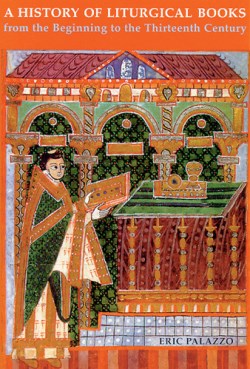
History Of Liturgical Books
$39.95The history of liturgy and liturgical books is of interest not only for theologians and liturgists but also for historians, art historians, archaeologists, anthropologists, and researchers in religious sciences. This work meets the interdisciplinary need for a history and a typology of liturgical books.
A History of Liturgical Books from the Beginning to the Thirteenth Century is an introduction to Western liturgical sources and a synthesis of their history for more than a millennium. It provides a historiographic summary, examines the relationship between medieval history and liturgy, suggests new methods of research, and underscores the fruitfulness of an interdisciplinary approach.
Focusing on the history of liturgical books, rather than the history of liturgy, A History of Liturgical Books from the Beginning to the Thirteenth Century devotes a detailed chapter to each type of book intended for a specific celebration-Mass, Office, rites-and a specific presider-pope, bishop, deacon, monastic, etc. The crucial transition from oral practice to the use of the written document is discussed in every case, as is the illustration of liturgical books.
Add to cartin stock within 3-5 days of online purchase
-
Unread Vision : The Liturgical Movement In The United States Of America 192
$39.95The Second Vatican Council changed the practice of liturgy. Conciliar developments, however, did not emerge in a vacuum; they were the result of years of hard work that involved thousands of people across the United States and the world.
As a social history of the liturgical movement, The Unread Vision introduces readers to the movement’s pioneers and promoters and to the issues that emerged from the movement in the U.S. in the years 1926-1955. The Unread Vision explores the foundational years of the movement and its major themes and discusses how the movement, its goals and principles, was received by the broader community of American Catholics.
Add to cartin stock within 3-5 days of online purchase
-
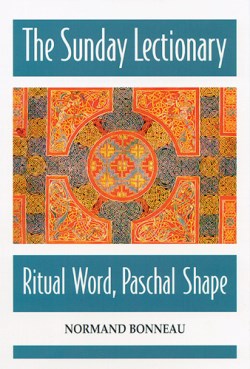
Sunday Lectionary : Ritual Word Paschal Shape
$24.95The Sunday Lectionary examines a key aspect of the liturgical use of the Bible: how the Lectionary puts biblical flesh on the bones of the liturgical calendar and gives paschal shape to the Christian year. Although the current Lectionary has been in use since 1969, its history, purpose, and structure remains relatively unknown to the many who proclaim or hear its readings. The Sunday Lectionary contributes to a theology of proclamation by explaining the principles that underlie the Lectionary’s selection of biblical passages and its patterns of reading distribution that structure the Sundays, feast days, and seasons of the liturgical year.
The book is divided into two parts. The first lays the groundwork by surveying the history of the Lectionaries (chapter 1), chronicling the highlights of the Vatican II Lectionary reform (chapter 2), and examining the characteristic traits of the revised Sunday and feast day Lectionary and its ecumenical import (chapter 3). The second part analyzes the Lectionary’s architecture for each of the liturgical seasons (chapters 4-9).
Liturgical proclamation breathes life into the ancient inscribed words, transforming them from words into the Word, thus bringing the transforming, nourishing presence of the risen Christ into the world. The Sunday Lectionary not only helps enrich theological conversation but helps pastors, homilists, worship leaders, rectors, cantors, and students of liturgy foster a deeper appreciation of the Lectionary and, through the Lectionary, the liturgy.
Add to cartin stock within 3-5 days of online purchase