Liturgy
Showing 145–156 of 206 resultsSorted by latest
-

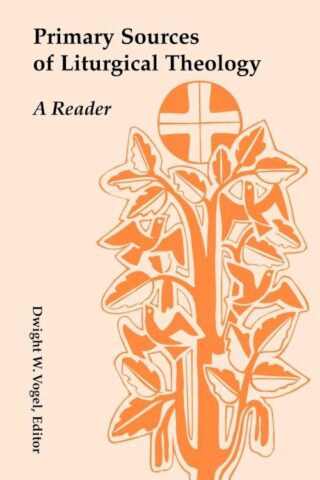
Primary Sources Of Liturgical Theology
$49.95The voices of liturgical theology in the twentieth century are many and varied. Primary Sources of Liturgical Theology brings together in one volume the representative writings of scholars throughout the Euro-North American context whose insights have shaped our understanding of liturgy today.
The selections in Primary Sources of Liturgical Theology are arranged around nine seminal questions which students of liturgical theology need to engage. Each selection is introduced and contextualized by another liturgical theologian. Through this first-hand encounter with primary sources readers will develop a sense of the broad range of writings available to them.
Add to cartin stock within 3-5 days of online purchase
-
Pastoral Liturgy New Handbook
$34.99A guide to liturgy and worship in the Church of England within the framework of ‘Common Worship’, which combines theory, theology and history with a strong sense of the realities of parish life and pastoral practice. It explores the way in which liturgy can reflect the life of the church and the wider world, and the new opportunities for churches at a local level to own and shape the liturgy they use. This book is essential reading for anyone involved in worship in the Church of England, and who wants the worship of their church to be the best they can offer, based on clear liturgical principles. It is also practical and detailed – Michael Perham covers clothing and colours, children’s role in worship, the cycle of the Christian year, the timing of services, the use of church space and other elements that go to make up the feel of an individual church. The book has its roots in two of Michael Perham’s earlier works, ‘Liturgy Pastoral and Parochial’ and ‘Lively Sacrifice’, though much of the material is quite new, and fills its role as key texts for anyone interested in the liturgy of the Church of England.
Add to cartin stock within 3-5 days of online purchase
-
Sacraments And Sacramentals
$99.95The Handbook for Liturgical Studies provides a complete course of liturgical studies in five volumes. It is offered as a model, source, and reference for students of liturgy and liturgical ministry.
The Handbook for Liturgical Studies is marked by a number of traits which differentiate it from its predecessor Anamnesis, published by the Pontifical Liturgical Institute. First, the subjects in the liturgical ordo, history, and tradition are examined as sources and components of the theology of liturgy. Next, the Handbook pays significant attention to the role played by the human sciences in the liturgy (psycho-sociology, anthropology, linguistics, and the arts.) Pastoral and spiritual considerations receive appropriate treatment in light of liturgical principles, and general models based on the meaning and purpose of the liturgy are suggested. The materials of the East and the non-Roman West are integrated with the Roman, providing a comprehensive vision of Christian worship.
More than forty authors from Asia, Africa, Latin America, North America, and Eastern and Western Europe have contributed to the Handbook. Many are professors and graduates of the Pontifical Liturgical Institute in Rome. Each author, while drawing material from liturgical tradition and from ancient, medieval, and modern sources, writes also from a particular research and personal interest in a subject. Although diverse in style, the authors collectively express a spirit of fidelity to the Church, to its doctrine and tradition, and to its mission. The result is a cohesive view of the meaning, purpose, and celebration of Christian worship.
The editor’s goal through these volumes is for students to pay particular attention to the gradual unfolding of the material from Volume I to Volume V as well as to the methodology, historical setting, theological and spiritual doctrines, and the pastoral concerns in the Handbook. Through the study of these volumes, readers are led not only to a scientific understanding of the liturgy but also to an active and spiritually fruitful participation in the ecclesial celebration of Christ’s mystery desired by the Second Vatican Council.
Volume IV: Sacraments and Sacramentals contributes to a deeper understanding of the nature and purpose of sacraments and sacramentals and leads the reader to a more critical appreciation of Vatican II decrees and what the postconciliar reform has implemented. This fourth volume opens with a review of the basic litu
Add to cartin stock within 3-5 days of online purchase
-
Holy Preaching : The Sacramentality Of The Word In The Liturgical Assembly
$29.95The reform of the liturgy has dramatically changed the way Roman Catholics and all Christians understand their worship. The arena of the encounter has shifted from a passive experience of observation of the great Mysteries to one that invites active participation on many levels. Yet, the imagination of many who preach, preside, and gather to worship continues to be shaped by a passive model as well as by the notion of sacramental activity as a product to be received or given, rather than expressed and shared in communion with one another. In The Holy Preaching, Paul Janowiak deepens the discussion of Christ’s presence in the Word by offering critical reflection on the disparity between the theology and the practice of preaching and some explanation as to why that disparity exists.
Janowiak provides an overview of twentieth-century ecclesial sacramentality. He discusses the liturgical movements and important theological issues that led to reform and provides an in-depth analysis of how sacramental theologians Karl Rahner, Otto Semelroth, and Edward Schillebeeckx advanced the dialogue of Christ’s presence in the Word. He explains that despite the seminal work done by those sacramental theologians, a specifically liturgical understanding of Christ’s presence in the Word remains largely a theological concept and not a grace-filled reality. Part of this gap in theory and practice is the result of a fractured liturgical celebration. The Liturgy of the Word appears a distinct and often unrelated part of the entire eucharistic celebration. Using contemporary literary theory, Janowiak tackles this gap and roots out the foundations of this disparity between theology and its practice in worship. He inserts creative liturgical and sacramental theology into the literary particularities of sacred text, shared tradition, and communal hearing. From this a new lens on the sacramentality of the Word emerges.
The dialogue begun by sacramental theologians Rahner, Semelroth, and Schillebeeckx is re-opened by Janowiak. He examines the fruits of the liturgical reform of the past forty years and parallel movements in critical theory. The result is an understanding of Christ’s presence in the Word in a way that reveals the Mystery of God at work in the gathering of believers.
Add to cartin stock within 3-5 days of online purchase
-
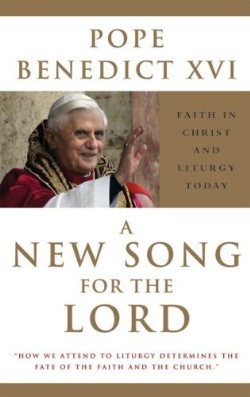
New Song For The Lord
$31.18The theologian of the Vatican Council and prefector of the Congregation of the Faith in the Vatican makes accessible from different approaches the essential elements of a theology of worship. Joseph Cardinal Ratzinger’s exploration ultimately culminates in an exploration of the question: Who do you say that the Son of Man is?
Add to cartin stock within 3-5 days of online purchase
-
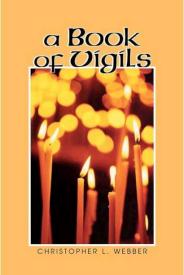
Book Of Vigils
$33.26Introduction
A Vigil In The Presence Of God
A Vigil For Peace And Justice
A Vigil For The Sick
A Vigil At The Time Of Death
A Vigil For Maundy Thursday
A Vigil Of Pentecost
A Vigil Before The Election Or Consecration Of A BishopAdditional Info
This useful book falls in the category of resources for structuring liturgies to fit local occasions. In addition to seven complete vigil services inspired by the ancient monastic discipline of nighttime prayer and meditation, there are new models such as “A Vigil in the Presence of God” or “A Vigil for Peace and Justice”.Ample notes throughout explain the history of vigils and offer advice for planning small private and large public vigils.
Add to cartin stock within 3-5 days of online purchase
-
Enriching Our Worship 2
$30.60Prepared by the Standing Commission on Liturgy and Music and adopted by the 73rd General Convention, this new set of materials was adapted from sources in scripture; a variety of contemporary prayer books throughout the Anglican Communion; traditional materials from Orthodox and medieval western sources; and hymnody of various American cultures. Newly written texts and some texts from the 1979 Book of Common Prayer which have been revised are also included.
Add to cartin stock within 3-5 days of online purchase
-
Enriching Our Worship 1
$27.93This is the new edition of Supplemental Liturgical Materials. New materials include seventeen additional canticles taken from the Old Testament, the Apocrypha, the New Testament, Anselm of Canterbury, and Julian of Norwich. There are also additions and changes to the previously published supplemental materials including a third Eucharistic Prayer.
Add to cartin stock within 3-5 days of online purchase
-
Prayer Book Rubrics Expanded
$43.93A liturgical manual that discusses each service of the Church according to shape, theology, past practice, and varieties of local expression. The book contains helpful material not only for clergy and worship committees, but also for church musicians.
Add to cartin stock within 3-5 days of online purchase
-
Feminist Liturgy : A Matter Of Justice
$15.95Feminist liturgy began in the midst of a broad human quest for justice in the late twentieth century. The Civil Rights Movement and the Anti-Vietnam War movement added momentum for women’s struggle for justice. Within this ferment, women addressed the limits placed on them in secular and religious institutions as well. Feminist liturgies developed as one of a number of attempts to discover and claim a more truthful telling and embodying of the stories that shape our religious consciousness. In Feminist Liturgy: A Matter of Justice, Walton offers a “partial account” of feminist liturgies to encourage both discussion and action so that our liturgies will be “true” for all of us.
Walton explains that liturgies typically described as “feminist” emerged in the late 1960s when women and some men realized that what they were experiencing in the liturgies not only wasn’t “enough” but, in fact, wasn’t “true.” A liturgical process that centers on an encounter-an engaged, embodied dialogue with God-cannot be true when females are left out of the dialogue. To make the liturgies more accurate, people joined together to discover how to use symbols, texts, and forms that expressed relationships with God more authentically.
Walton examines four aspects of feminist liturgies: the historical context in which they developed, the tasks and principles that guide them, the possibilities they offer, and application to regular institutional liturgies. In examining these aspects, Walton responds to questions, clarifies hunches, alleviates doubts, and encourages more people to contribute to the development of feminist liturgies.
Add to cartin stock within 3-5 days of online purchase