Ecumenism
Showing 25–36 of 49 resultsSorted by latest
-

Spirit Poured Out On All Flesh
$37.00The Pentecostal movement has had an incredible impact on the shape of worldwide Christianity in the past century. Estimates are that Pentecostals and charismatics make up approximately one-fourth of Christians worldwide, and the numbers are only expected to grow. With these developments comes the need for thoughtful Christians of all persuasions to better understand Pentecostal theology. In fact, Amos Yong believes that Pentecostal theology can be a great gift to the church at large.
Yong presents a thoroughly Pentecostal theology of salvation, the church, the nature of God, and creation. He also provides a fascinating survey of the state of worldwide Pentecostalism, examining how Pentecostal theology is influencing Christian churches in other countries.
Add to cartin stock within 3-5 days of online purchase
-
Apostolicity Then And Now
$34.95Apostolicity Then and Now explores apostolicity from its origin to today. Apostolicity is a fundamental mark of the church, referring to Jesus’ faith given to, carried on, and taught-unaltered-by a continuous line of apostles. This book primarily focuses on how apostolicity pertains to the church as a whole and views apostolic succession in light of how apostolicity is applicable to the church. Scriptural, historical, theological, and ecumenical contexts provide a thorough study that includes worldviews and their impact on apostolicity.
Add to cartin stock within 3-5 days of online purchase
-
1 With God
$24.95In recent decades the doctrine of salvation has become a key issue in international ecumenical conversations between Lutherans and Roman Catholics and also between Lutherans and Eastern Orthodox. The 1998 Joint Declaration on Justification between the Vatican and the Lutheran World Federation is a historic milestone in those efforts. Advances in ecumenical conversations have challenged the traditional opinion according to which the Lutheran view of justification by faith has been thought to be opposed to both the Eastern Orthodox doctrine of theosis (deification) and the Roman Catholic view of justification, which also includes sanctification.
In One With God Karkkainen points out that amidst all the differences between the East and West with regard to theological orientations and the language and concepts for soteriology, there is a common motif to be found: union with God. Both the Eastern understanding of theosis and the Western idea of justification have union as the ultimate goal.
Add to cartin stock within 3-5 days of online purchase
-
Communio Sanctorum : The Church As The Communion Of Saints
$16.95Communio Sanctorum is the most recent product of the Lutheran-Catholic dialogue in Germany and the first major Lutheran-Catholic ecumenical statement since the ground-breaking Joint Declaration on the Doctrine of Justification. It focuses on the ecclesiastical issues that the Joint Declaration identified as the remaining obstacles to Lutheran-Catholic communion. It describes the church as the communion of saints and then uses that description as a framework for addressing some of the most ecumenical issues: sacraments, ministry, the role of the church in salvation, and papacy.
While not claiming to have finally settled such difficult issues Communio Sanctorum does represent a new convergence on these questions. Uniquely, the dialogue then uses this understanding of the communion of the saints to address issues related to the communion that transcends death: the nature of eternal life, prayers for the dead, veneration of the saints and Mary.
Communio Sanctorum has sparked vigorous debate in Germany and makes a major contribution both to Lutheran-Catholic dialogue and to the wider ecumenical enterprise.
Add to cartin stock within 3-5 days of online purchase
-
Breaking The Conspiracy Of Silence
$30.00It’s been estimated that perhaps 7,000 people die each day due to AIDS. It is an epidemic that has no easy answer, but Messer prophetically calls upon Christian churches worldwide to respond in ways to increase awareness, help with both prevention and treatment, and offer concrete love and compassion.
Add to cartin stock within 3-5 days of online purchase
-
Justification And The Future Of The Ecumenical Movement
$14.95On October 31, 1999, in Augsburg, Germany, officials of the Lutheran World Federation and the Roman Catholic Church signed two documents, an Official Common Statement with its Annex and the Joint Declaration on the Doctrine of Justification. The Lutheran Churches belonging to the Lutheran World Federation and the Roman Catholic Church were declaring publicly and in a binding manner that a consensus in basic truths of the doctrine of justification exists between Lutherans and Catholics.
Within four months of the Augsburg signing, the Yale University Divinity School and the Berkeley Divinity School at Yale sponsored a theological conference “Justification and the Future of the Ecumenical Movement.” The goal of the conference was to begin testing the wider import of the Joint Declaration.
The essays in Justification and the Future of the Ecumenical Movement explore the larger implications of the Joint Declaration. The majority of the chapters are the presentations made at Yale in 2000. Three of the chapters were written later than the Yale conference and are included in this collection to expand the range of the discussion and to add new insights.
Add to cartin stock within 3-5 days of online purchase
-
Witnessing For Peace
$40.00The rapidly deteriorating situation in Israel/Palestine has dashed hopes of any imminent peace or even accommodation between the Israeli people and the Palestinian people. A leader in Palestinian Christianity, and an outspoken advocate of nonviolence and of Palestinian rights, Bishop Munib Younan directly addresses this situation and its imperatives. Born of Palestinian refugee parents and raised in Jerusalem, Younan has spent his life pastoring Palestinian Christians and searching for nonviolent solutions in this complex and volatile religious and political scene. In this volume, Younan presents first the historical and social context of the Palestinian situation, beginning with the not-well-known story of Arab Christianity and his own background. He elaborates his own theology of nonviolence, centered in the idea of martyria–heeding a call to justice, inclusion, and forgiveness. He illustrates the notion with dramatic and often tragic episodes and shows how it can address key issues in the current struggle with Israel over statehood, land, and refugees. Younan’s model of Christian nonviolence also has demonstrable benefits in addressing terrorism, interreligious strife, and global peacemaking. Younan’s is a voice all Christians of conscience should hear.
Add to cartin stock within 3-5 days of online purchase
-
Dynamic Equivalence : The Living Language Of Christian Worship
$29.95S
Additional Info
In studying the history of the vernacular in worship beginning with the Christian Scriptures, Dynamic Equivalence uncovers the power of a living language to transform communities of faith.
How we pray when we come together for common worship has always been significant, but the issue of liturgical language received unprecedented attention in the twentieth century when Latin Rite Roman Catholic worship was opened to the vernacular at Vatican II. Worshiping in one’s native tongue continues to be of issue as the churches debate over what type of vernacular should be employed.Dynamic Equivalence traces the history of liturgical language in the Western Christian tradition as a dynamic and living reality. Particular attention is paid to the twentieth century Vernacular Society within the United States and how the vernacular issue was treated at Vatican II, especially within an ecumenical context.
The first chapter offers a short history of the vernacular from the first century through the twentieth. The second and third chapters contain a significant amount of archival material, much of which has never been published before. These chapters tell the story of a mixed group of Catholic laity and clergy dedicated to promoting the vernacular during the first half of the twentieth century. Chapter Four begins with a survey of vernacular promotion in the Reformation itself, explores the issue of vernacular worship as an instrument of ecumenical hospitality and concludes with some examples of ecumenical liturgical cooperation in the years immediately preceding the Council. The final chapter treats the vernacular debate at the Council with attention to the Vernacular Society’s role in helping with the implementation of the vernacular.
Add to cartin stock within 3-5 days of online purchase
-
Worship And Christian Identity
$24.95Worship and Christian Identity argues that sacramental and liturgical practices are the central means by which a church shapes the faith, character, and consciousness of its members. Consequently, for any church to set aside such practices as outdated or irrelevant is to set aside the means by which the church nurtures and sustains its theological identity. From this perspective, Anderson explores the following questions: What is the relationship between worship and belief? What is the relationship between corporate worship and the formation of Christian persons and communities? What is the relationship between worship and our knowledge of ourselves, our world, and God? How might our attention to the reform and renewal of worship and sacramental practice provide a framework for theological, evangelical, and sacramental renewal?
Questions of sacramental practice, inclusive or transformative language, and the renewal of congregational hymnody have been largely displaced by marketing questions and conflicts between “traditional” and “contemporary” worship. The hour of worship is subdivided now into increasingly specialized “target audiences” of singles, seekers, boomers, and “X-ers” with worship carefully packaged as “traditional” or “contemporary.” What at various points has been understood as a “means of grace” is now seen primarily as a “means of numerical growth.”Missing in the conflict between “traditional” and “contemporary” worship is significant discussion of what is at stake for the identity of Christian persons and communities in the shape and practice of worship. Perhaps more surprising, discussion of the theological shape and practice of worship also has been absent in discussions concerning theological standards. These absences suggest that for many in the church today, worship is a means for expressing a community’s belief but has little to do with the shape and character of that belief.
The assumption that worship is only or primarily a pragmatic means for expressing a community’s belief stands in sharp contrast to the Christian tradition. This assumption also contrasts with the insights provided by recent work in ritual studies, psychology, and faith development.
Worship and Christian Identity is an important book for faculty and students in seminary and graduate programs in liturgical studies and religious education, particularly those interested in the relationships between liturgical studies and practical theology, ritual st
Add to cartin stock within 3-5 days of online purchase
-
Interchurch Families
$21.00Marriage and families are becoming increasingly complex. No longer can any of us speak with simplicity about what a “typical” family is like, now that our vocabulary includes words like “single parent,” “blended,” “multi-faith,” etc. This is a brief, usable book designed for ministers and priests to use with congregants who are entering into, or are already in, an interchurch marriage. This book can also be useful for laity involved in interchurch families.
Add to cartin stock within 3-5 days of online purchase
-
Trinitarian Theology : East And West
$416.66This book is a unique contribution to the dialogue between the traditions of Eastern and Western Christian thought. Through the writings of Karl Barth and John Zizioulas, Collins creates an ecumenical dialogue about Trinitarian thought. During the last decade the doctrine of the Trinity and the concept of koinonia have been much in evidence in ecumenical contexts. Collins looks beyond the growing ecumenical consensus to examine the origin for the basis for the consensus, and suggests that it is possible to root it in Western thought as well as in Eastern Orthodoxy.
Add to cartin stock within 3-5 days of online purchase
-
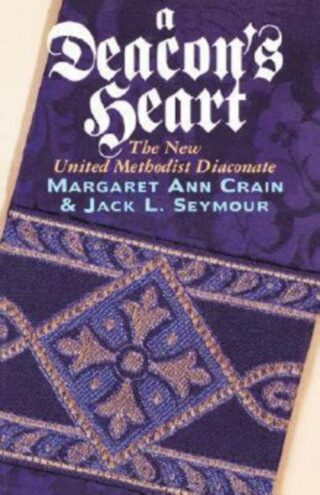
Deacons Heart : The New United Methodist Diaconate
$23.99A Deacon’s Heart is a significant gift not only to The United Methodist Church but also to the larger ecumenical community. The diaconate is growing at a tremendous pace in many denominations around the world. In all communions that have chosen to establish a permanent diaconate, emphasis has been exerted in interpreting the meaning and influence of the new orders and offices to the total ministry of the Church. This book will take its place as an interpretive resource on the new deacon in The United Methodist Church. It will assist in understanding not only the vision of the deacon, but how the very nature of the diaconate can lead the Church in renewal.
Add to cartin stock within 3-5 days of online purchase